
Snow and Weather Forecasts
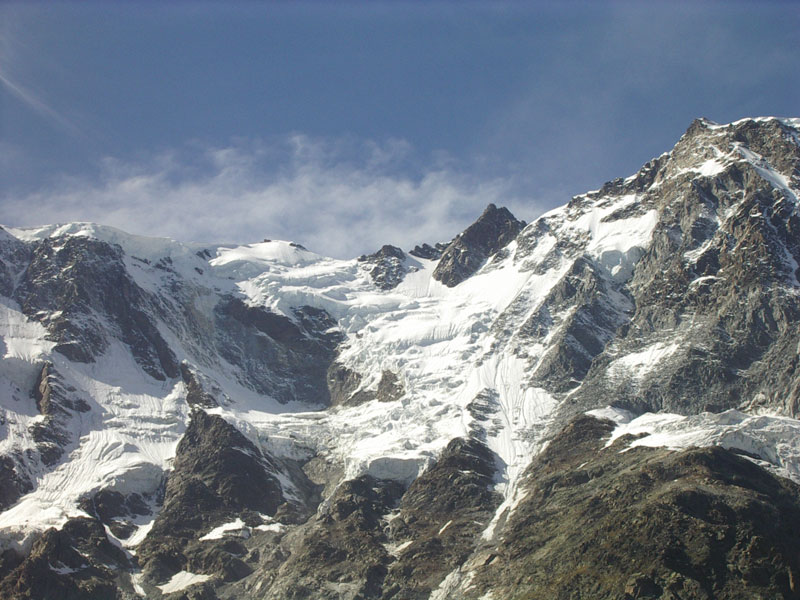

After the hard blows from the summer of 2003, this year the permanence of the freezing level above 4000 m. for more than five weeks during the middle of the day, the crisis seems to further develop the balance of our mountains.
Just take a look at the webcam installed to monitor the status of summer resorts, to realize:
Just take a look at the webcam installed to monitor the status of summer resorts, to realize:
Saturday 29 July 2006 3 minutes reading time
For experts it is the alpine region of the Earth where you are to hear the effects of global pollution.
According to a report by the World Glacier Monitoring Service of the 'University of Zurich and published in Geophysical Research Letters, in 2100 the glaciers of the Alps will be almost gone.
The mathematical model upon which these considerations provides an increase in summer temperature of 3 degrees Celsius, plausible hypothesis held by climate scientists.
According to a report by the World Glacier Monitoring Service of the 'University of Zurich and published in Geophysical Research Letters, in 2100 the glaciers of the Alps will be almost gone.
The mathematical model upon which these considerations provides an increase in summer temperature of 3 degrees Celsius, plausible hypothesis held by climate scientists.
The speed of the winding up has tripled since the seventies onwards, and particularly after the mid-eighties. In addition, since 2000, three years of torrid heat of five gave a blow to the glaciers, especially in the summer of 2003. That year the heat wave that swept through Italy, France and Switzerland took the average temperatures reach values ​​of a few degrees above the average, which caused a thinning of the average thickness of three meters of ice: the double of that recorded during the previous record year, 1998, and five times the average. Also from 1850, the total volume is reduced by two thirds. The average rate since 1980 but is 1%.
Rising temperatures are also recorded in recent weeks over the Swiss Institute of simulation and could result in the disappearance of the glaciers of the Alps in the coming 20 years.
The consequences of the withdrawal of glaciers may be different from that of both economic control of the territory. Not only will you have a collapse of tourism, but in the course of this century will face the dangers of ephemeral lakes that form and disappear somewhat 'anywhere, even within a single season, the rocks will crumble for lack of ice now that glue, you will face problems hydrogeological not indifferent to flash floods of the rivers that receive water from the glaciers and much more.
Social media engagement
Più letti in Meteo e neve

NOAA: torna El Niño, come potrebbe influenzare l'inverno 2026-2027 sulle Alpi?
La NOAA (National Oceanic and Atmospheric Administration) ha pubblicato il 9 luglio il nuovo aggiornamento sul fenomeno climatico ENSO (El Niño-Southern Oscillation), confermando che El Niño è ormai in pieno sviluppo e che continuerà a rafforzarsi nei prossimi mesi. Secondo i climatologi statunitensi, il fenomeno dovrebbe raggiungere il proprio massimo proprio durante l'inverno boreale 2026-2027, con una probabilità del 97% di persistere fino alla primavera 2027 e con possibilità sempre più elevate di raggiungere un'intensità tra le più elevate osservate dal 1950.
2