
Snow and Weather Forecasts
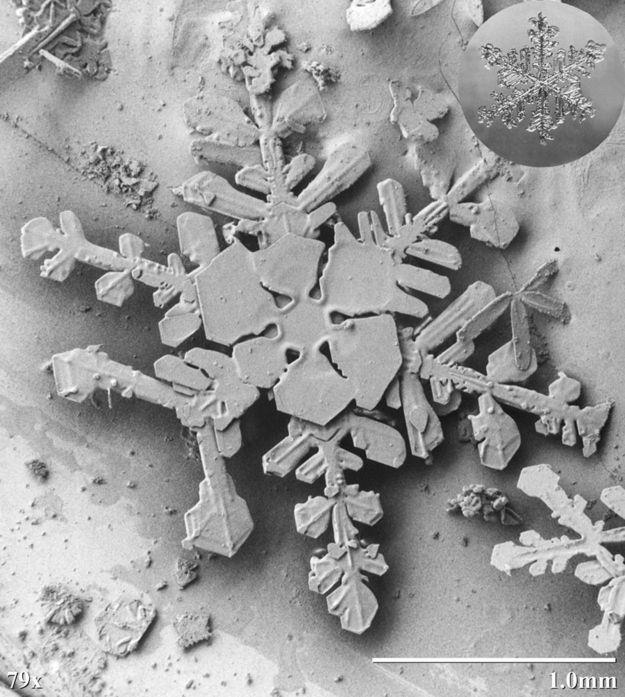

It may soon be possible to create a snow cannon superecologico, which produces snow using solar energy, even at temperatures a few degrees above zero, without polluting and without the 'use of chemicals. & Nbsp; If sar & agrave; possible sar & agrave; thanks to a young engineer of Trento, Francesco Besana, and all''azienda Israeli Ide, who in different times and places have managed to create a prototype.
Thursday 23 October 2014 5 minutes reading time
Traditional & nbsp; cannons, which today whitening the slopes of our ski areas, they shoot at very high pressure, and 5 or 6 feet tall, water through nozzles that atomize into tiny droplets. These, in sub-zero temperatures, crystallize and fall to the ground in the form of snow. & Nbsp; & nbsp; There cannons that work at pressures and different weather conditions, although to produce snow at temperatures above -3 & deg; C are necessary substantial amount & agrave; attidivi of chemicals, expensive and potentially dangerous for the 'environment.
The principle used dall''ingegnere Trentino, and the Israeli Ide (a global leader in desalination of & rsquo; water), however, relies on quality & agrave; physico-chemical dell''acqua, which at a temperature of zero degrees and in the absence of atmospheric pressure to the states coexisting liquid, solid (ice / snow) and gaseous. & nbsp; & nbsp; This state of equilibrium magical & egrave; the basis of life on our planet, pu & ograve; also be reproduced at a temperature of 15 to 20 degrees Celsius, graduating physical conditions at the boundary.
The 'Israeli company Ide & egrave; able to take advantage of this first principle, producing snow at high temperature without chemical additives, but its snow & egrave; expensive: to produce it consumes a large amount & agrave; electricity, and l & rsquo; plant & egrave; as big as a two-storey house, practically unusable, at least in the context of the ski slopes. & nbsp; L & rsquo; engineer Francesco Trento Besana, father of the prototype NeveXN ("eternal snow") & egrave; succeeded ottenre the same purpose but with a process pi & ugrave; efficient. His snow machine, in fact, transported on a cart, & egrave; a sort of glass bell & Outdoors; interior of which, in vacuum conditions not pushed, the 'water solidifies in a first time giving rise to a sort of batter ice and then crystallizes into snow crystals.
But the magic that & egrave; earned the patent consists in the fact that Besana & egrave; succeeded in producing snow using thermal energy, not power, and therefore potentially even solar energy.
You might think to industrialize the principle of producing a snow cannon superecologico, no additive, zero pollution, operating at any temperature and humidity & agrave ;. NeveXN could be extremely useful immediately to prepare the first layer on the tracks in anticipation of snowfall and without waiting for the temperature remains firmly below zero. & Nbsp; Successful projects as NeveXN not born in a day. Besana, after a doctoral thesis in "Technologies for l & rsquo; Environment" she continued her studies in Berkeley, California, and returned to Italy & egrave; managed to get the support of the institutions of Trentino and European funds for the ricerca.Dopo years of study and work, these days NeveXN & egrave; failed to produce snow at a temperature of 15 degrees. & nbsp; NeveXN & egrave; able to guarantee, with its technology, both high-quality snow & ice-slurry agrave ;, both for the food industry, construction and health care.
© ALL RIGHTS RESERVED
Social media engagement
More details

Più letti in Meteo e neve

NOAA: torna El Niño, come potrebbe influenzare l'inverno 2026-2027 sulle Alpi?
La NOAA (National Oceanic and Atmospheric Administration) ha pubblicato il 9 luglio il nuovo aggiornamento sul fenomeno climatico ENSO (El Niño-Southern Oscillation), confermando che El Niño è ormai in pieno sviluppo e che continuerà a rafforzarsi nei prossimi mesi. Secondo i climatologi statunitensi, il fenomeno dovrebbe raggiungere il proprio massimo proprio durante l'inverno boreale 2026-2027, con una probabilità del 97% di persistere fino alla primavera 2027 e con possibilità sempre più elevate di raggiungere un'intensità tra le più elevate osservate dal 1950.
2