
Olympic Games2026 Olympics

Mezzelani - GMT Sport

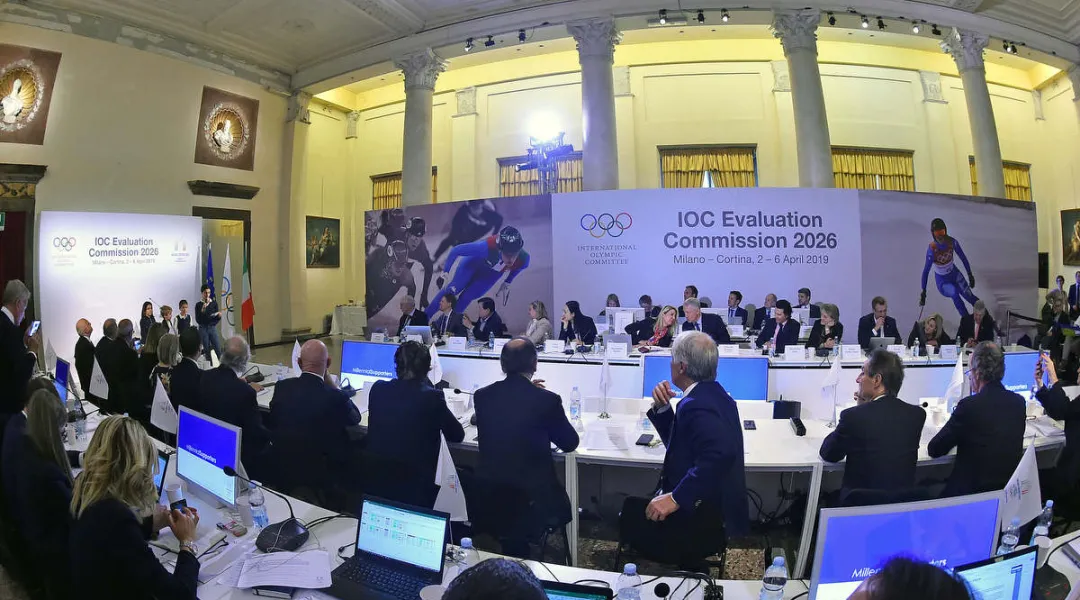
After visiting the past few months in Sweden and Italy, the IOC Evaluation Commission made public the report containing its comments on the Stockholm-Are and Milan-Cortina applications in view of the final vote that the IOC Assembly is called to do June 24th.
Saturday 25 May 2019 8 minutes reading time
Pros and cons, opportunities and critical aspects: the 144-page report turned the two candidacies like a sock to provide members of the International Olympic Committee with all the elements to arrive at an informed choice.
Analyzing in detail the elements of judgment on the Italian candidacy emerges as for the IOC inspectors the point of greatest weakness is represented by the works to be carried out to bring the Eugenio Monti track back to Cortina which, used for the 1956 Games and definitively closed in 2008, requires a major reconstruction investment. The Milan-Cortina dossier has estimated the required cash out at $ 48 million but the IOC Commission highlights how, in light of the size of the interventions needed and on the basis of comparison with similar projects, this amount is from considered to be considerably undervalued. The report even suggests evaluating the option of using a gut already in operation abroad.
Surprisingly, the impressions of the observers, especially from our own countries, are overturned: while the Commission gives a nod to the Swedish choice to use Sigulda, considered by many to be "bizarre", since it is able to make Latvia enjoy an Olympic experience that, otherwise, does not would be able to live, the Cortina track, with its legendary past, risks becoming a burden for the Italian candidacy.
Remaining with the installations, doubts are also raised about the opportunity to invest around 33 million for the construction of the roof at the Baselga di Pinè Speed Skating ring and on the correct estimate of both the investment required and future management costs.
The choice of competition locations and the program of the Games are not exempt from criticism. The Commission highlights how the choice to host the male sector of Alpine Skiing in Bormio and the female sector in Cortina creates problems for enthusiasts and leads to a necessary duplication of the professionals (volunteers, judges, managers of the Federation) and stresses how the FIS itself has expressed itself by guaranteeing that the Ampezzo area is perfectly capable of hosting the entire calendar even if, and this is the other side of the coin, Cortina risks having to manage Bob on the peak days when there are Alpine Skiing races or Sledding and Curling an influx of 27,000 spectators putting all infrastructure at risk.
Still remaining in the Alpine Skiing program, the Italian proposal to carry out the women's descent on the penultimate day of races does not allow for "parachutes" in the event of weather-related problems. Strong is the call to maintain the traditional division with speed disciplines in the first week and technical disciplines in the second. Moving on to Figure Skating, on the other hand, it appears that the program looks like a photocopy of PyeongChang 2018 and Beijing 2022 with morning sessions that in a European scenario cannot work by cutting off the American television market and much of the European audience; the obvious suggestion is to return to evening sessions.
The other critical point, and it could not be otherwise, is transport and it is meager consolation that the competing candidacy of Stockholm- Are is dealing with similar problems. The Evaluation Commission has "discovered" that the transport network for the three mountain clusters (Cortina, Val di Fiemme and Bormio / Livigno) is based on one-lane roads and an insufficient railway network. Transport for spectators, volunteers and professionals could turn into a nightmare, forcing the Olympic family to stay overnight in areas where receptivity will already be under pressure from athletes, staff and media representatives. But the point that most urges the CIO seems to be to allow athletes to experience the Olympic atmosphere to the full, which means finding efficient ways to allow even those involved in mountain resorts to be able to participate in the Opening Ceremony at San Siro and that of closing at the Verona Arena as well as being able to attend the competitions of teammates involved in other disciplines. A very difficult puzzle solution.
From the reading of the report, in conclusion, the image of a non-very strong candidacy comes out, as it is often described that could be favored compared to Stockholm-Are only in some of the points of analysis, in particular as regards institutional support, paying something to Sweden in other places like using technology. It will be a head-to-head fight where, as it happens more and more, in the end more political reasons than merit will prevail. We will know who will prevail on June 24th.
© ALL RIGHTS RESERVED
Social media engagement
Ultimi in Sport invernali
Slittino su pista naturale: a Formia si conclude il lungo raduno dello squadrone azzurro
Con lo start di Coppa del Mondo in programma il 19-20 dicembre a Obdach, la nazionale di Moroder sta lavorando duro con 12 atleti impegnati sino a domani nel centro di preparazione olimpica del CONI.

184