
Figure skating - European Championships 2014
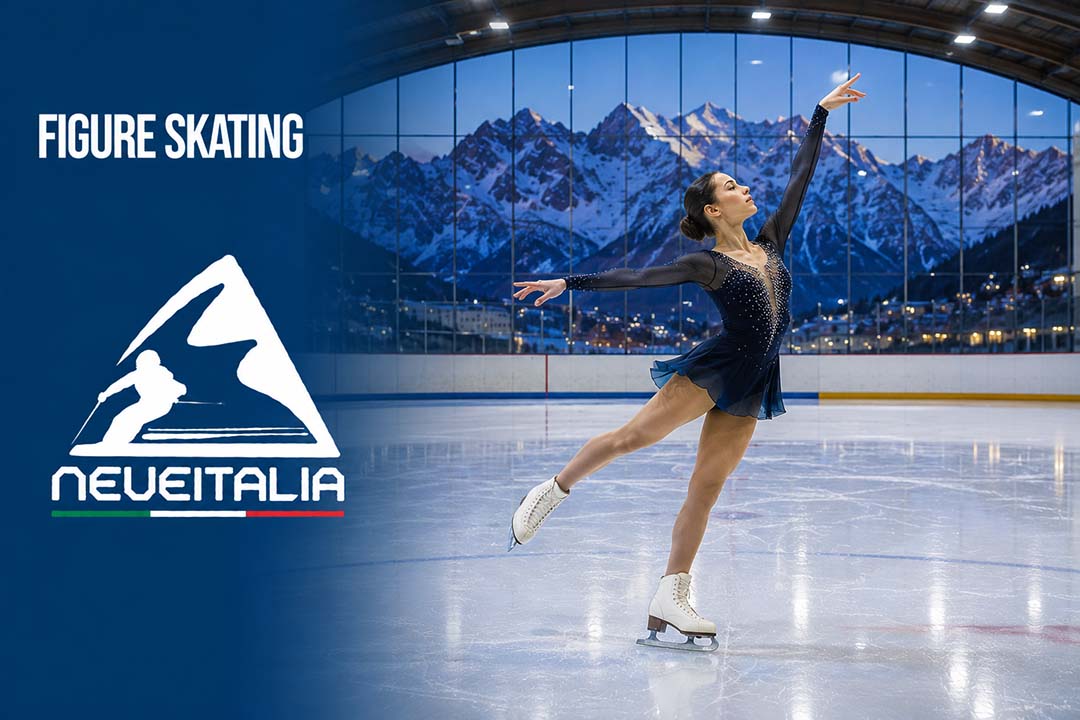

Getty Images / AFP

On Friday evening last year when Carolina Kostner won the bronze in Budapest, his ninth career medal in the European Championships in figure skating, there are those who immediately spoke of disappointment.
Monday 20 January 2014 6 minutes reading time
This assertion is completely unfounded us. In four of the last five races of the first world-wide, including the latest in Budapest, Carolina has exceeded a quota that had never reached before in his career in events of this kind, that of the 190 points by summing the performance in the short program and in the free. This means that four out of five European titles won, and in particular that of 2012 belonging to this four-year Olympic and world title again in 2012, he defeated them with lower scores.
And, without in the least detract from its merits, won them first, because they had a competition at the European level lower than the current, second, because the World Championships in Nice two years ago the only two phenomena that could impensierirla, Kim Yu- Na and Mao Asada, were absent and the other one but this veteran of countless personal vicissitudes, all of her mother's death, and so he could not make it to the fullest. Paradoxically, it smells more gold silver world of 2013 behind and in front of Kim, Asada, plus eight points higher than the previous year gold. In Budapest Kostner, despite falling on a triple toe loop and doing a double instead Rittberger triple scored his second best score ever at the European Championships, second only to last year.
All of this means that after the disaster in Vancouver Carolina, which already at that time was the most successful Italian skater of all time and who had the merit to excite a lot of people to his sport in our country, he had the strength to work to become a skater more solid than it was before and it has succeeded. The problem is that the last continental level came the phenomenal Russian new generation: one, Adelina Sotnikova, had already threatened to beat last year, the other, Julia Lipnitskaya, Budapest has a free program stellar debut by winning the gold in the event in front of Sotnikova and Kostner.
So it is certainly not to blame for Carolina now if the competition has increased and will increase again, because another brood of young Russian is knocking at the gates of glory, the first of Elena Radionova. Disappointments were to be considered silver medals in 2009 and 2011 behind Laura Lepisto and Sarah Meier, bravissime skaters but not up nor Kostner neither of these young Russian, nor Kim and Asada. Yet in Italy the bronze in Budapest is considered a disappointment because of our icons is always expected and only victory (see Alberto Tomba and Valentino Rossi: how many times they had to read "just one second"?) Without any account against the level of opponents, or their absences.
For example, in the biathlon Lukas Hofer won the sprint in Antholz. For heaven's sake, very good, there has definitely made excite a lot, but in South Tyrol lacked many of the top of the rankings of the World Cup, yet many pronosticheranno Lukas as safe or very likely medal in Sochi but then butcher him if he will not reach the goal . We must not create excessive expectations of an athlete, as has been done for Carolina Kostner since he was designated as standard-bearer for Torino 2006, and prejudice to the case of Gardena, one can not speak of disappointment after a bronze as that of Budapest, where anyway Carolina is expressed almost at best. But unfortunately all this is happening in Italy, a sign that we still have a sporting culture as much, if not all, to learn.
Social media engagement
Ultimi in Sport invernali
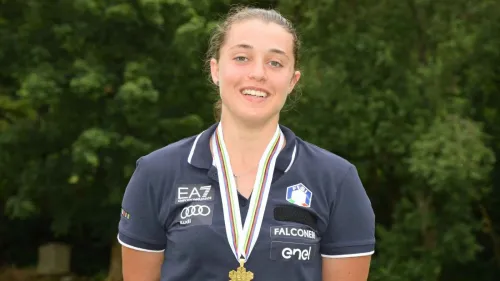
Ricco week-end in Cechia: Nicole Mastalli vince in super-g, Michael Bertagno in slalom dopo il dominio di Ales Knor
Sci d'erba: sulla pista di Obri Sud Javornik, triplo appuntamento FIS (e per la Junior Cup) partendo dalle gare veloci col timbro della lombarda, mentre in gigante comincia il dominio della nazionale di casa, con la chiusura odierna in slalom che parla azzurro in ambito maschile. Nel prossimo week-end le finali di Coppa del Mondo a Predaia, nel cuore del Trentino.
2