
Figure Skating - ISU Challenger Series 2015
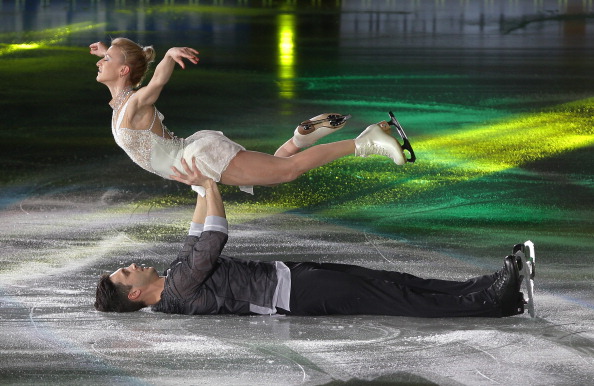

Getty Images

A few days from beginning of the second edition dell''ISU Challenger Series, & egrave; interesting to understand the main dynamics of the circuit trying to ask ten simple questions.
Wednesday 16 September 2015 14 minutes reading time
So that & rsquo; & egrave; l & rsquo; ISU Challenger Series?
L & rsquo; ISU Challenger Series & egrave; a circuit which includes competitions in group B (or second level) scheduled between the first day of August and 15 December. The events held immovable by the International Federation (ISU), are the Nebelhorn Trophy in Oberstdorf (GER), Finlandia Trophy in Espoo (FIN), the 'Ondrej Nepela Trophy in Bratislava (SVK) and the Golden Spin of Zagreb (CRO) .
How many stages are planned and where they take place?
The International Federation (ISU) has identified ten events hosted by the same nations and two continents (Europe and America). In each stage they must be organized at least three senior competitions specialty & agrave ;.
1) US International FS, Salt Lake City, United Uniti16-20 September
2) Nebelhorn Trophy in Oberstdorf, Germany 24 to 26 September
3) Ondrej Nepela Trophy, Bratislava, Slovacchia1-3 October 4) Trophy Finland, Espoo, Finland 8-11 October 5th) Mordovian Ornament, Saransk, Russia 15-18 October
6) Denkova-Stavinski Cup, Sofia, Bulgaria 20 to 25 October
7) IceChallenge. Graz, Austria Oct 27-Nov 1
8) Trophy Tallinn, Tallinn, Estonia November 18-22
9) Cup Warsaw, Warsaw, Poland 26 to 29 Nov 10) Golden Spin of Zagreb, Zagreb, Croatia 2 to 5 December
Compared to last year, there are no scheduled the Lombardy Trophy in Sesto San Giovanni, the 'Autumn Classic International Barrie and the Volvo Cup Riga, replaced by Mordovian Ornament Saransk, from Tallinn Tallinn Trophy and Denkova-Staviski Cup of Sofia. In essence, Russia, Bulgaria and Estonia have taken over in Italy, Canada and Latvia.
Who can & ograve; participate in & rsquo; ISU Challenger Series?
All skaters to July 1 of & rsquo; year & have already agrave; 15 years old can take part in the circuit. Remain subject to the rules on citizenship PROVIDED & rsquo; Article 109 (Rule 109) of the & ldquo; ISU Constitution and General Regulations & rdquo ;.
Athletes are entered by the federation of the country of origin, must not be in possession of a minimum score to participate in competitions and can not compete in more & ugrave; three stages.
How many athletes per nation may be fielded in each event?
And '' provided that each nation can field a maximum of two athletes per each specialty & agrave ;, while the host country is not subject to any limit.
How it is determined the winner of the circuit "& rsquo; ISU Challenger Series"?
Is not serious; provided a ranking based on the place obtained in each stage. In each specialty & agrave ;, the final victory goes to & rsquo; athlete / couple who has scored the most & ugrave; summing up the overall results (total score) of the two best races. With & ldquo; & rdquo total score; It means the sum of the scores obtained in the short program (short-dance) and free program during the same race.
What are the differences with the other second-tier international competitions?
The first difference & egrave; linked to the points that are awarded for the STANDING WORLD. The events of the ISU Challenger Series, provided they respect a set of criteria, assign 300 points to the winner of the competition (instead of & eacute; 250 other competitions of the second level), 270 to the runner (instead & eacute; 225), 243 in the third (instead of & eacute ; 203), 219 in fourth (instead & eacute; 182), 198 in the fifth (instead & eacute; 164), the sixth 178 (only the men's, women's, dance), the seventh 160 (only the men's and women's), all''ottavo 144 (only the men's and women's).
Second, as is done in top-level events (Grand Prix Sr. and Jr., Olympics, ISU Championships, Olympic qualifying and the World Team Trophy), the scores obtained in the competitions ISU Challenger Series will be taken into account when determining the personal records of the participants and seasonal.
Finally, compared to other competitions of the second level, there are strict rules regarding the various officials.
PANEL TECHNICAL & ndash; It requires that at least two of the three components are the qualification & ldquo; & rdquo ;, ISU while remaining figure should be at least the qualification & ldquo; International & rdquo ;. The three Members of the panel must come from different nations.
REFEREE & ndash; It must have a minimum qualification of & ldquo; International & rdquo; and can & ograve; also come from the same country of one of the three members of the technical panel
DATE OPERATOR OPERATOR and REPLAY & ndash; Must have a minimum qualification of & ldquo; International & rdquo;
JUDGES & ndash; They should be at least seven representing different countries and must be at least the qualification & ldquo; International & rdquo ;. However, in exceptional cases, the vice-president may dell''ISU & ograve; allow the presence of six judges only.
What criteria must be met in order that & egrave; racing circuit Challenger Series assign points for the World Standing?
At the time of the draw, the subscribers to the male and female events must be at least 8 representing 4 different countries. As for the dance, it requires a minimum of 6 pairs representing at least 4 countries, while on the front of the pairs of artistic & egrave; request a minimal presence of five members, representing at least three different countries.
If one of the competitions in the program does not comply with the minimum criteria of enrollment, will not come & agrave; taken into account in drawing up the final classification of & rsquo; ISU Challenger Series and no points will be awarded for the STANDING WORLD.
In addition, if at the time of the draw will be registered not to stop athletes from at least 10 different nations, no points will be awarded for the STANDING WORLD and not be held & agrave; account of the results for drawing up the final classification of & rsquo; ISU Challenger Series.
What & egrave; the prize for the winner & rsquo; ISU Challenger Series?
The winner of the circuit aggiudicher & agrave; 4,000 Swiss francs (5,000 for couples and dance). Second prize will be up to 3,000 Swiss francs (4,000 for couples and dance). The third porter & agrave; home 2,000 Swiss francs (3,000 for couples and dance).
In addition, those who impose in a stage of ISU Challenger Series will come & agrave; automatically entered in the so-called & ldquo; & rdquo ;, Alternate List crucial to occupy the vacancies for the stages of the Grand Prix. In essence, the federation that organizes a stage of Grand Prix, if you some free place, potr & agrave; invite, in addition to those who are in the top five of the & rsquo; alternating list, who also won a stage of ISU Challenger Series.
& Nbsp;
What are the main differences compared to the first edition?
The main novelty & agrave ;, with a few more standard & ugrave; restrictive Qualification Panel, & egrave; represented by faculty & agrave; each organizing committee not to make the draw before the free program by establishing the 'order of descent on ice according to the classification of short-program. In essence, as in the Grand Prix, the first out on the track would be the 'last in the ranking at the end of the first segment of the race.
There will be the big names still in business & agrave;? Several top athletes of the discipline attend all''ISU Challenger Series. The vice-world champion Satoko Miyahara is, for example, entered the stage of Salt Lake City, while Olympic champions Volosozhar / Trankov announced participation in the Nebelhorn Trophy in Oberstdorf.
& Nbsp;
HALL OF FAME
DANCE
1) 329.32 & ndash; (USA) Shibutani / Shibutani 2) 310.40 - (ENG) GUIGNARD / FABBRI3) 285.83 & ndash; (UKR) Nazarova / NIKITIN
PAIRS OF ARTISTIC
1) 329.34 & ndash; (USA) SCIMECA / Knierim 2) 325.08 & ndash; (USA) DENNEY / FRAZIER 3) 312.64 & ndash; (USA) CALALANG / SIDUU
AREA MEN
1) 468.10 & ndash; (CZE) BREZINA Michal 2) 450.31 & ndash; (RUS) Alexander Petrov 3) 440.54 & ndash; (RUS) Konstantin Menshov
FEMALE FIELD
1) 389.97 & ndash; (RUS) TUKTAMYSHEVA Elizaveta 2) 335.00 & ndash; (RUS) LEONOVA Alena 3) 326.65 & ndash; (USA) Hannah MILLER
© ALL RIGHTS RESERVED
Social media engagement
Più letti in Sport invernali
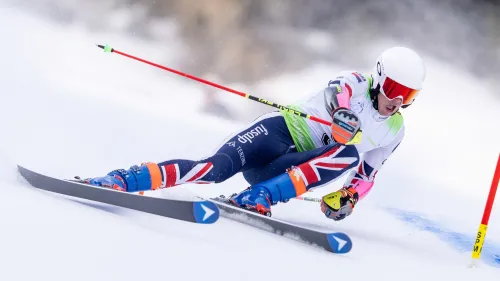
Tocca a Freddy continuare la striscia dei fratelli Carrick-Smith: prima vittoria in ANC per il britannico e per Amelia Smart
Australian New Zealand Cup 2026: a Coronet Peak si è tornati finalmente a gareggiare, con lo slalom maschile che vede il classe 2007, vice campione del mondo jr di specialità, precedere nettamente Meissl e Hagen. La specialista canadese anticipa Hoffmann e la solita Butler nella prova femminile. Ora i giganti.
2