
Figure SkatingFigure skating - interviste

Irene Villalón Vázquez

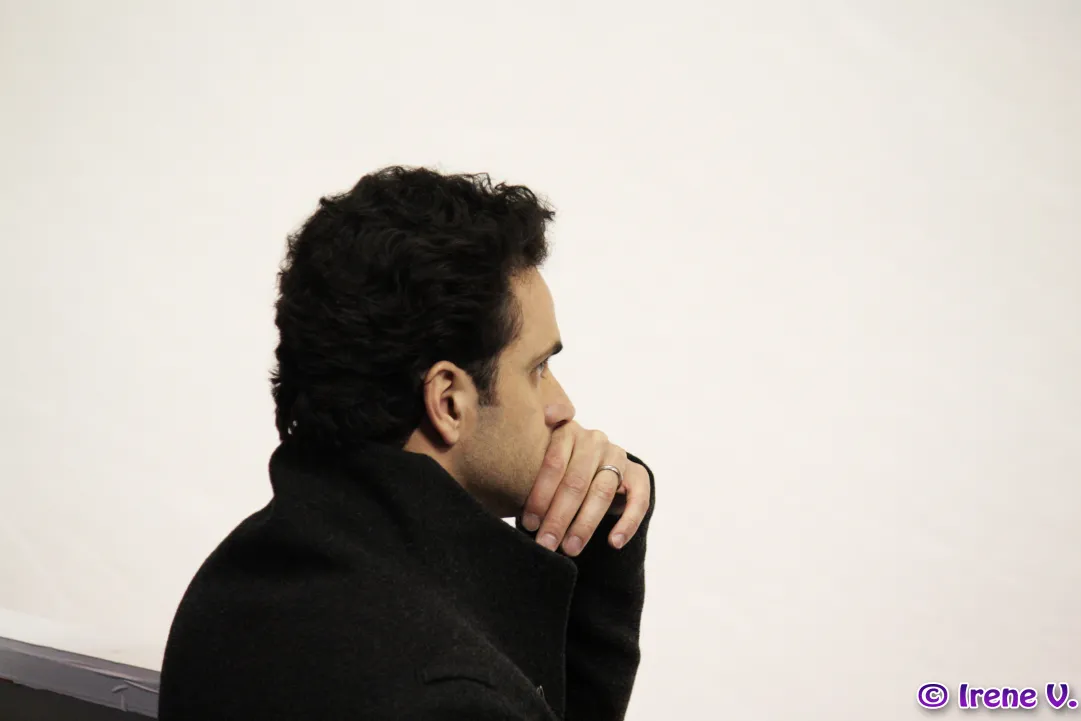
Our correspondent Laura Sciarrillo met Patrice Lauzon, Canadian ice dancer and now full-time coach in his hometown Montreal, right after his skaters' Free Dance. Patrice kindly answered our questions about how his coaching career has started, his coaching team and his top pair, the Spanish ice dancers Sara Hurtado/Adrià Dìaz.
Thursday 30 January 2014 11 minutes reading time
Why did you start coaching right after retiring, without spending many years in doing shows around the world?
As Marie-France and I had to move overseas to find a high-level place where to train, before the end of our career we had already decided that after retiring we would have started an Ice Dance school in Montreal, our city. We thought that it was so stupid we had to train in Europe when just in Montreal there are about a hundred ice rinks... Therefore, after retiring from competitive skating and doing some shows, we started our own school.
You have been coaching the Spanish ice dancers, Sara Hurtado/Adrià Díaz, for a few seasons now. How did it started? What did you work on with them at the beginning, as they had never skated as an ice dance couple before?
They came to us in the middle of the 2011/2012 season, about three weeks before the European Championships. We didn't have that much time to prepare for that competition of course, so we only worked on training them and getting them as ready as possible for the European Championships. After that, we worked a lot on basic ice dance skills: skating together, having a good flow on the ice, improving ice dance holds.
Their Free Dance is quite particular, can you describe it and tell us how did you come up with that idea and developed it?
It is a particular Free Dance indeed! We chose it altogether: Marie-France, the guys and I. It's the story of the painter Picasso and his most adored muse, Dora Maar. The music is from the movie Surviving Picasso. I found it, and in my opinion it was an extremely beautiful music; Sara and Adrià loved it and therefore Marie France and David Wilson built a choreography on it. It was the first time for this team to work with David.
We wanted to do something Spanish for the Olympic season, they strongly wanted to skate to a Spanish music, but not tango or flamenco: something authentic yet not overused. The final part of the program is actually an ancient Spanish poem, sung by the Spanish singer Estrella Morente.
Sara and Adrià are a special team: they can connect very well between each other, that's why I thought that they would have been able to effectively portray this story on the ice.
I noticed that they received applauses today even while doing transitions. It is not common at this level of ice dance.
Yes, we always try to refine their programs as much as we can. They obviously need to improve under many aspects and have been skating together for only a few years, but we don't want them to be a team that recycles elements from one year to the other or that performs always the same elements. That's why we change their lifts every year, for example. All of them. It would make no sense to put them into a program if they don't fit the story or the mood of the dance.
You have talked about your teams, now let's talk about you and Marie-France: what kind of coaches do you think you are, style-wise?
Well, we try to combine together the American and European styles of interpreting and portraying ice dance. I am of course generalising now, but I would define the American skating faster, with more power, and concentrated on the elements, on their perfect execution. Tessa and Scott are an exception here, in my opinion. Whereas the European school is centred on interpretation, telling a story, portraying emotions, showing the theatrical side of ice dance. Marie-France and I are trying to make a mix of all of these aspects, taking something from both schools.
How do you organize your work? Do you both work on technique and choreography or are your roles different?
Marie-France is the choreographer and I am the technical coach.
Ice dance schools often rely on actors, mimes or other “outside” sources to enrich their skater's training. Do you do the same?
Yes, we have ballet teachers, ballroom dance teachers and theatre teachers. For example, Sara and Adrià worked a lot with our theatre teacher during the off season, in the summer.
Besides the Spanish ice dancers, I know that you coach a Canadian ice dance pair, Élisabeth Paradis/François-Xavier Ouelette. Are you coaching other teams, besides these two?
Yes, I also coach junior Canadian ice dancers Carolane Soucisse/Simon Tanguay. Both Canadian teams had a bad Short Dance at the Ottawa National Championships, but then skated a good Free Dance. Paradis/Ouelette were fifth in the second competition segment, while Soucisse/Tanguay even ranked second in the Free Dance. Marie-France and I also coach the Danish ice dancers Laurence Fournier Beaudry/Nikolaj Sørensen.
I have one last question: how is it to work with your wife everyday?
(laughs) I don't think I have ever been asked this question. It's not difficult at all. Actually, when we used to skate together during our competitive years, we saw each other every single day of the year. Now either I am or she is away for work. She has just finished skating in the TV show Battle Of The Blades, and now I am here at the European Championships, so I can say that it's not difficult because now we don't see each other all day long. We once made a calculation, and in fourteen years we have only spent two whole days far apart...that's not a lot of time!
Social media engagement
Più letti in Sport invernali
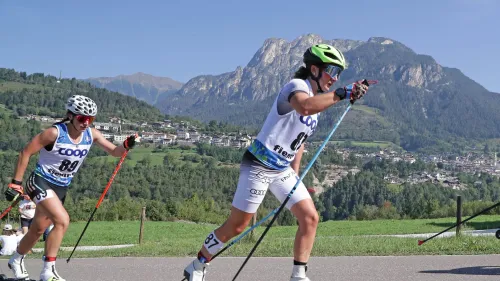
L'Italia dello skiroll saluta Madona e un Mondiale da 4 medaglie, l'ultima è di Boccardi nella Mass Start
La roveretana è di bronzo nella partenza in linea a skating, firmata dalla solita Ragnhild Aarenkol, con la gara maschile vinta dal padrone di casa Vigants (amaro 4° Dellagiacoma). Titoli juniores alla norvegese Lia e allo svedese Blomberg Gerle.
2