
Ice HockeyNHL

2018 Getty Images

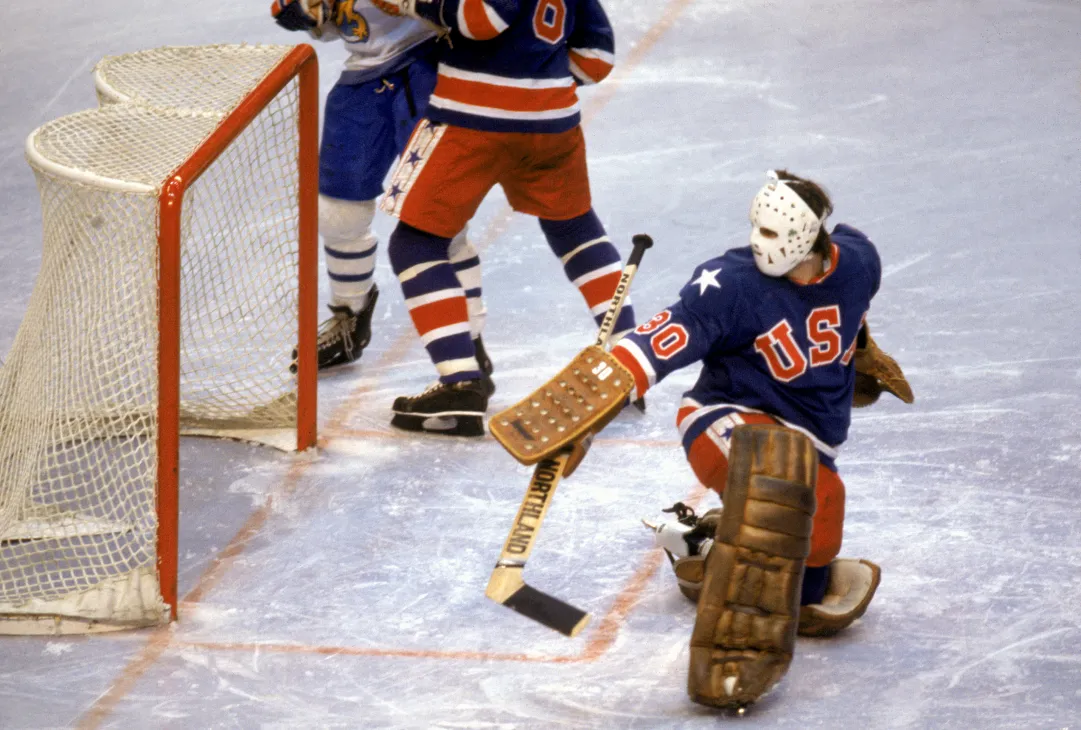
Over the years the role of the goalkeeper has changed profoundly, and if we watched a game of the first half of the '900 we would struggle to believe our eyes.
Friday 16 November 2018 7 minutes reading time
Since 1917 - the date of the birth of the NHL - to date, there have been many rules introduced to better regulate the most important role of the game we love so much.
Let's go over the main changes that took place during this century, through some curiosity.
The first curiosity, of which few are aware, is that at the time of the foundation of the NHL, the goalkeepers had to remain standing to parry the puck. It was, in fact, forbidden to dive or otherwise let themselves fall on the ice voluntarily, and who was the protagonist of this violation, was punished with a lower penalty.
However, to circumvent this sanction, some goalkeepers had specialized in making it appear that the acrobatic parades, falls and dives were simply accidental and involuntary. Became famous for his "feints" was Clint Benedict, historic goalkeeper of the Ottawa Senators. Craig Anderson, goalkeeper of the current Ottawa Senators, in 2012 also dedicated a celebratory helmet to him.
However, this rule, carved in the traditions of the oldest Canadian hockey, however, was short lived in NHL, and was repealed on January 1, 1918, decreeing the birth of the famous butterfly style, perfected in the coming decades, first by Glenn Hall and then by Martin Brodeaur.
The evolution of penalties is also curious.
Until 1933, when the goalie was sanctioned, the penalized team had to play in empty net; it was not in fact possible to replace the goalkeeper! If we add then that (until 1957 when Jean Beliveau scored 3 power play goals in 44 seconds ... but that's another story), the power play did not end with the realization of a goal, a penalty suffered by the goalie meant losing the game !
A first modification was introduced, as mentioned, in 1933: the penalized team was given the opportunity to replace the goalkeeper by putting a player in the door movement, which had to place among the posts without the equipment of the goalkeeper ... in short, a kind of sacrificial victim.
A few years later, in 1939 the player called to replace the goalkeeper was allowed to use the goalie stick, the shield and the caliper, but not the rest of the protections ... a small step forward.
Only in 1950, it was decided to stop the massacre of the movement players' poles, and to make one of them penalize the penalty imposed on the goalkeeper, just as it is today.
Let's go further and come back to the present day.
In 2004/05, a further novelty was introduced that profoundly changed the role of the goalie: the trapezoidal area behind the door (enlarged by another 60 cm in 2014) outside which the goalkeeper can not play the disc, under penalty of minor penalty.
The reason for this novelty you should ask the legendary New Jersey goalie Devils, Martin Brodeaur, recently introduced in the legendary Hockey Hall of Fame.
Marty, in fact, throughout his career has revolutionized the role of the goalkeeper, turning it into an added defender, often moving away from the cage to recover the disks that opponents threw into the corners to gain the third offensive (the so-called "dump") and, in essence, nullifying the "dump and chase" opponent.
The neutral zone trap in the forecheck phase and the "free" role of Brodeaur (to use the football jargon) were so well oiled and tested that the New Jersey Devils became the nightmare of every attack for about a decade, between years '90 and 2000.
Precisely to avoid that the goalkeeper had such an active role in the defensive phase, and above all, in the constant attempt to increase the number of goals scored and put an end to the c.d. Dead Puck Era, the NHL then introduced the famous trapeze.
As we have seen, over the course of a century and a half of play, since the dawn on the Canadian frozen lakes of the 1800s, the role of the goalkeeper has radically changed, but remains a constant. To decide to get on the path of a disk thrown to more than 100 miles per hour serves a good dose of madness!
To use the words of the legendary Flyers goalkeeper, Bernie Parent: "You do not have to be crazy to play goalie, but it sure helps"!
NHLITALIA #NHL
© ALL RIGHTS RESERVED
Social media engagement
Più letti in Sport invernali
Tocca a Freddy continuare la striscia dei fratelli Carrick-Smith: prima vittoria in ANC per il britannico e per Amelia Smart
Australian New Zealand Cup 2026: a Coronet Peak si è tornati finalmente a gareggiare, con lo slalom maschile che vede il classe 2007, vice campione del mondo jr di specialità, precedere nettamente Meissl e Hagen. La specialista canadese anticipa Hoffmann e la solita Butler nella prova femminile. Ora i giganti.
113