
Alpine SkiingAlpine skiing - finlandia
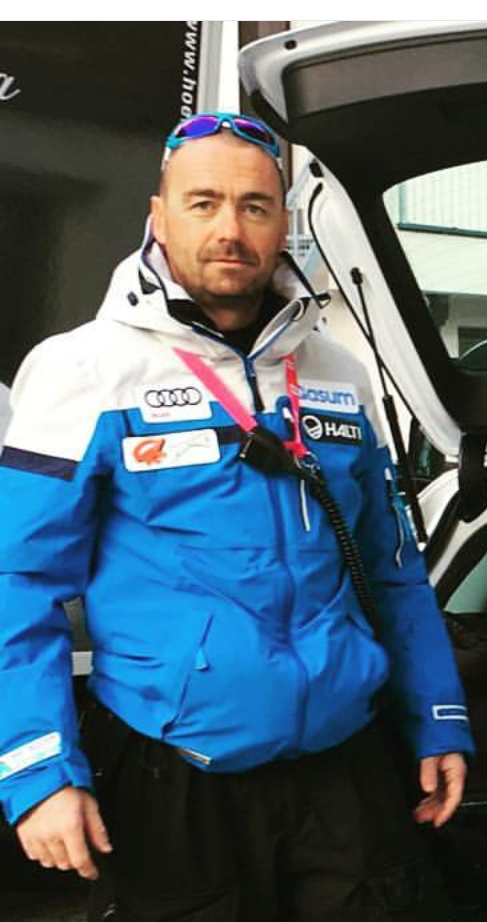

Alessandro Serra kuvat

Neveitalia met with the trainer of the Finnish technical disciplines Alessandro Serra who since May 2014 is trying to bring to the world elite a movement that after the retreats of Palander and Poutiainen has seen to lose attentions at home and exit from the top positions of this Mainly alpine discipline. .
Monday 10 July 2017 20 minutes reading time
Since entering the technical staff of FISI, Italian coach Alessandro Serra has always been busy with the good results of young Italian guys since the beginning of the 2000s.
For more than fourteen years in FISI he has practically occupied all possible positions, whether they are of A, C, FuturFISI, or of the European Cup guys who were, but at some point in the 2014 season, this role was a bit strict .
He felt the need for new stimuli.
Hence the request to make a big leap and take care of the National Team Blue World Cup.
But after the Sochi Olympics the Fisi chose another road, not including Serra in the next season in the coach organization for the national team and as he always took on his presence as a secondary coach to the national movement.
For the 44-year-old Piedmontese Cesana Torinese, it was a rather unexpected blow, considering all the busy commitment with young blue guys. Under his leadership the various Heel, Nani, De Aliprandini and Tonetti just to name a few, have shortly flown their flight from the Europa Cup and steadily reaching the World Cup top positions.
But in that same spring for Alexander, he closed a door, he was immediately open to another with the call of the Finnish Federation to enter their coach staff to revive the movement Suomi.
In the world of skiing Alpine skier Serra, however, he was already well acquainted with his collaboration and help in the past to Finnish boys in terms of logistics and support for their workouts on Italian glaciers.
Hence the proposal by Ski Sport Finland president Marko Mustonen in May 2014 to begin official collaboration with Serra to start a long-term revival of the Finnish team and thus try to revive the brilliant successes achieved in the 2000s by the duo Palander / Puotiainen.
Green has immediately accepted this personal challenge as a coach aware of the enormous potential of gigantic Sandell, always limited by more or less serious injuries and the good prospects that the young Finns have shown in the European Cup in recent seasons. .
Already near to start his fourth season in the Alpine Finland Alexander makes the point of his movement's situation in the technical disciplines with a look at what the FIS should do to make even more spectacular the World Cup circus.
- What major differences did you find - as a mentality, approach to races, training methods - in these first three years, from Italian to Finnish to Alpine Finns?
Difficult to talk about differences ... I realize that the needs of athletes are always the same, whether they are Finnish or other nationalities. Surely the Finnish mentality, in some ways calm, very reflexive, is quite different from my (the Italian one), the most enthusiastic, instinctive. We had to work very hard to find a profitable meeting point for performance. In these seasons, deeper work has been done on the training approach.
We have definitely changed the training methodology. We have looked at the effectiveness of the performance, looking for the limit in every run and every technical gesture, without taking into account any mistakes. All physical, technical, technical performance is now far more than the limit, thanks to a change in skiing technique, physical training, and the attitude of the coach staff. In the approach to the race we are still working to find the right balance between agility and safety in performance, and that is why it is for 2 seasons that I decided to be leaving near the athletes on race days.
- During the six months of summer how does your coach work? Do you often go to Finland to refine your physical training together with your kids or do your stages take place on the alpine glaciers?
We must distinguish well between athletic preparation and ski training.
From 2 seasons to this part, the Federation has entered into an agreement with SantaSport, the center of "high performance sports" of Rovaniemi. The athletic training guidelines are dictated by the technicians of this center, but my contribution is to bring my experience in Italy and implement the guidelines.
For example, the Finnish school is very advanced on strength training and stability, but in recent seasons we have definitely improved endurance and eccentric strength, which are the cornerstones of physical training in italy.
We have a trainer in my staff devoted to the daily athletic training with the kids, but I often also participate in the dry training that we do in Rovaniemi during the summer.
As for skiing, this year saw the change of giant material, we decided to stay on European mountain glaciers, privileging the amount of days on snow instead of quality going to South America or New Zealand.
- Definitely Marcus Sandell is the most talented Finnish gigant and because of injuries he has not yet fully expressed his full potential. How is his rehabilitation going and what predictions can give us on his return to the World Cup circuit at full swing?
Marcus is working at full speed to get back to the level he competes with. The recovery is taking place in the expected times, and should come back on the skis towards the end of August. It is doing the recovery phase without hesitation, respecting the technical times for the recovery of such an important operation. On the positive side, Marcus did not suffer a trauma when he stopped, it was a weighted but inevitable decision, as the problems that were the result of the accident in 2009 had become unsustainable.
The goal we set ourselves is to be the starting point for Solden, as an athlete must have a well-defined goal to plan his physical work but above all mental, but will only compete if he is really ready to compete at a high level .
- You know him very well and he has followed closely in the last 4 years; Can you describe us better "Sea" Sandell as gigantic or as a boy outside the ski slopes?
Endless Talent .... Marcus. It has a "touch" on the snow I had never seen before, a sense of sensitivity and a "brain intelligence" out of the ordinary. But what impresses me continually is his dedication to work, his daily tenacity, his mental strength. Only by living side by side we can understand how much pain at every moment of his life and his career caused him the postmodern incidents of 2009. But despite the daily pain I have never seen Marcus give up, he never missed a day of Training, and even days when the pain was too strong "Mare" went to the gym to do dry workouts.
Marcus's motivation is as great as his resistance to sorrow ... amazing. Keep in mind Sea was in the Top 15 in Giant skiing about half, or even less, of its opponents ... Experience has taught Marcus how to handle, how to handle his body and performance, but needs a A guide, a person or a team to trust in expressing all its potential. Outside the ski "Mare" is a very pleasant, calm and reflexive person ... honestly every now and then to shake him a bit more I try to tell him that he has to be a little more selfish to excel among the best.
- Probably in the coming period, the jumping and fund teams in Finland will have to deal with budget reductions as a result of the unsuccessful Lahti 2017 World Cup. You alpine and albeit with a smaller team numerically as you are facing the economic side this season that will lead to the Pyeongchang Olympics?
Economic constraints are now part of the daily budget. Since I came here 4 years ago, SkiSportFinland has taken enormous steps to improve the economic situation and give the teams the right support. The Mustonen Sports Manager is working on this issue every day.
As far as the Pyeongchang Olympics are concerned, the Federation has made a special effort to meet my demands and build a staff appropriate to the preparation of the Olympics, because Marcus, due to the time of recovery from the accident, will necessarily have timing and Training, different from Torsti and Piirinen. Certainly Marcus's forcible stop will force us to optimize the work in the fall and winter start to recover lost time in testing new materials in spring and summer, while with Torsti and Piirinen we can try to improve performance right away.
- At the start of last season, Finland has lost the best young prospect on which it was more concerned about the future, because of a serious injury, namely Santeri Paloniemi Junior Champion. Do you see other young Finns - boys and girls - of perspective on the Finnish youth scene?
Certainly Santeri's retirement was a major loss for Finnish skiers.
In Finland we have so few numbers that we can not afford to lose talented athletes. Torsti and Piirinen, though not World Junior Championships, are growing quite well, and have come to the most impressive step in their career, or the transition between being Europe Cup winners to be World Cup skiers. This is the most difficult obstacle to overcome and is the step where most good athletes are likely to be stranded.
Torti and Pirinen are working really hard, their conviction has definitely changed, we will see if they will meet my expectations that are definitely high, as I believe a lot in them.
Other interesting athletes seem to be in the Finnish landscape, but to demonstrate their real value they will have to face European Fis races and especially in the European Cup, only then will they have a clearer picture of their real value.
In the women's field, Rikka Honkanen has a good potential and in Korpio is growing well.
In the last 3/4 seasons of Alpine skiing, injuries have been exponentially multiplied in all disciplines and among all nations both men and women. You can count on the fingers of a hand immune immune skiers in these years. In the 1980s and 1990s, the percentages were considerably lower. What do you explain by? And what corrections would it take?
Answering this question is not so easy. Surely the ever-to-snow bond, due to the ski / plate / attachment / boot combination, produces much higher forces and speeds than just a few years ago. Probably we have reached the limit of physical endurance, and often athletes break through without even dropping. The muscular strength of the athletes and the ski technique allow you to make the most of these materials, but at the expense of safety. Solution?? I would not know ... definitely returning to the 30 mt radius of the Giant Mountains will help the back problems, but the travel speed of the curves will increase considerably, and consequently the forces acting on the athletes .... we will see.
If you were the manager of the Alpine Ski World Cup what would you like to change? Or what improvements would the circuit do to have more media appeal and to "defend" you from the so-called "young" disciplines - snowboard / freestyle / big air - which are increasingly aroused among younger generations?
I am convinced that a mix of history and innovation is needed to revitalize our sport. The rediscovery of parallels goes in this direction. I am fan of this format since its debut a few years ago. In my opinion, bringing them in cities, squares, or stadiums will be the key to their success. Skiing that moves close to the masses and not vice versa.
Too many times we "hide" at the top of the mountains in too far and inaccessible places for the fans. Basically in a ski race a fan sees his "champion" just one or two runs ... too little. At the same time, you can see the big ones competing several times and in the media they would have a much greater exposure.
Giants and 3-slalom slalom? Downhill in 2 races or race type 1 and Race 2 in SBK motorcycling, etc ...
One has to start to put something new on the plate, the spectacularization of television footage, the F1-style telemetry applied to athletes, that is, the television show must be a must in the future, and I hope this is soon understood by the FIS.
We must remember that we are sports, but we must always find a compromise with the show to survive and sell us better.
© ALL RIGHTS RESERVED
Social media engagement
Più letti in Sport invernali
Tocca a Freddy continuare la striscia dei fratelli Carrick-Smith: prima vittoria in ANC per il britannico e per Amelia Smart
Australian New Zealand Cup 2026: a Coronet Peak si è tornati finalmente a gareggiare, con lo slalom maschile che vede il classe 2007, vice campione del mondo jr di specialità, precedere nettamente Meissl e Hagen. La specialista canadese anticipa Hoffmann e la solita Butler nella prova femminile. Ora i giganti.
2