
Nordic SkiingCross country skiing

Getty Images

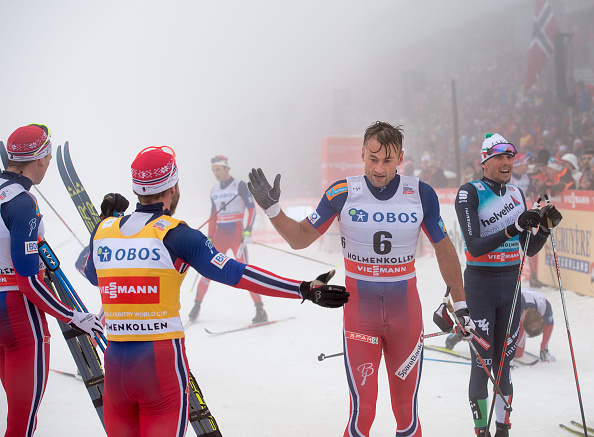
Continues to hold court in the world of skiing, the question of & rsquo; use of anti-asthma drugs by Norwegian athletes. In a context where many feel compelled to act, not always taking care to first acquire the necessary knowledge of the facts, & egrave; of particular interest as reported by Norwegian tabloid Dagbladet, who gave voice to some experts in the fields of sports medicine and respiratory disease.
Wednesday 28 September 2016 6 minutes reading time
Specialists converge on a fundamental conclusion: l & rsquo; exercise in extreme cold conditions favors the & rsquo; onset of asthma and other respiratory diseases.
& Nbsp; & ldquo; Athletes who practice endurance sports stumble in respiratory ailments because of & rsquo; exercise the same, especially in the cold. We could compare the phenomenon to muscle injuries in football & rdquo ;, said Lars Petersen, Danish physician, specialist in lung diseases and a member of the commission that investigates the case that characterized the & rsquo; the fund summer.
The same length d & rsquo; wave Tapio Videman, Finnish professor whose studies have highlighted the growing spread of & rsquo; asthma in countries where & egrave; widespread practice of cross-country skiing at low temperatures, such as Russia, Canada, Finland, Sweden and Norway the same.
The chorus joins Inggard Lereim, member of the FIS medical committee and standard bearer of the fight against doping: & ldquo; & Egrave; Obviously, the problem lies in the practice of prolonged exercise in the cold. We need to focus more of & ugrave; on the prevention of lung disease and study the & rsquo; impact of cold weather and wind have on athletes & rdquo ;. In this regard, there is already & agrave; a proposal: & ldquo; I asked that at a future meeting of the medical committee to be discussed l & rsquo; raising the minimum temperature threshold for the dispute of the race. Now the limit & egrave; at -20 & deg; C, which & egrave; definitely too low. I hope you can bring to -12 & deg; C at least for the sprint, which are the most & ugrave races; Critical & rdquo ;.
The same Lereim, besides suggesting to extend similar measures to the youth competitions, has nevertheless stressed that the issue is complex and goes even deeper, for example taking into account the & rsquo; influence of the wind: & ldquo; Around -15 & deg; C, a wind of one meter per second corresponds to a decrease of 2.3 degrees, the perceived temperature, and aggravates the & rsquo; lung irritation & rdquo ;.
The proposal has gi & agrave; met the favor of some figures of & rsquo; Norwegian fund environment, such as the & rsquo; coach Vidar L ø fshus and Simen Andreas Sveen, athlete and a medical student. Quest & rsquo; last, in particular, has placed the & rsquo; emphasis on an issue that is often forgotten when it comes to professional sports: that of life after the end of racing career.
& Nbsp; & ldquo; We'll have a life after careers in the fund & rdquo ;, said Sveen. & Ldquo; I do not think l & rsquo; use of preventive drugs against the & rsquo; asthma falls into a gray area or medical ethics. When the airways are irritated, take medicine preventively can memorize options ward off a disease. L & rsquo; preventive effect also affects the life that follows the end of his career & rdquo ;.
At the end of the season 2015, another endurance sports such as cycling you & egrave; moved on the subject of the dispute competitions in extreme weather conditions, with the & rsquo; approval of & rsquo; Extreme Weather Protocol. The first cases of application have not been particularly happy and have raised more & ugrave; of a controversy in the first place for the little homogeneity & agrave; of judgment. Sar & agrave; therefore essential, if indeed you'll want & agrave; put his hand to the regulation, establish criteria the most & ugrave; possible objective. In this sense, rely on a pool of experts, then moving on the basis of the indications of the latter instead & eacute; pressures on athletes and managers, seems to be the & rsquo; desirable approach.
Article by Matthew Novarini
© ALL RIGHTS RESERVED
Social media engagement
Più letti in Sport invernali
L'Italia dello skiroll saluta Madona e un Mondiale da 4 medaglie, l'ultima è di Boccardi nella Mass Start
La roveretana è di bronzo nella partenza in linea a skating, firmata dalla solita Ragnhild Aarenkol, con la gara maschile vinta dal padrone di casa Vigants (amaro 4° Dellagiacoma). Titoli juniores alla norvegese Lia e allo svedese Blomberg Gerle.

2