
Presentation of the 2019 season - '' 20
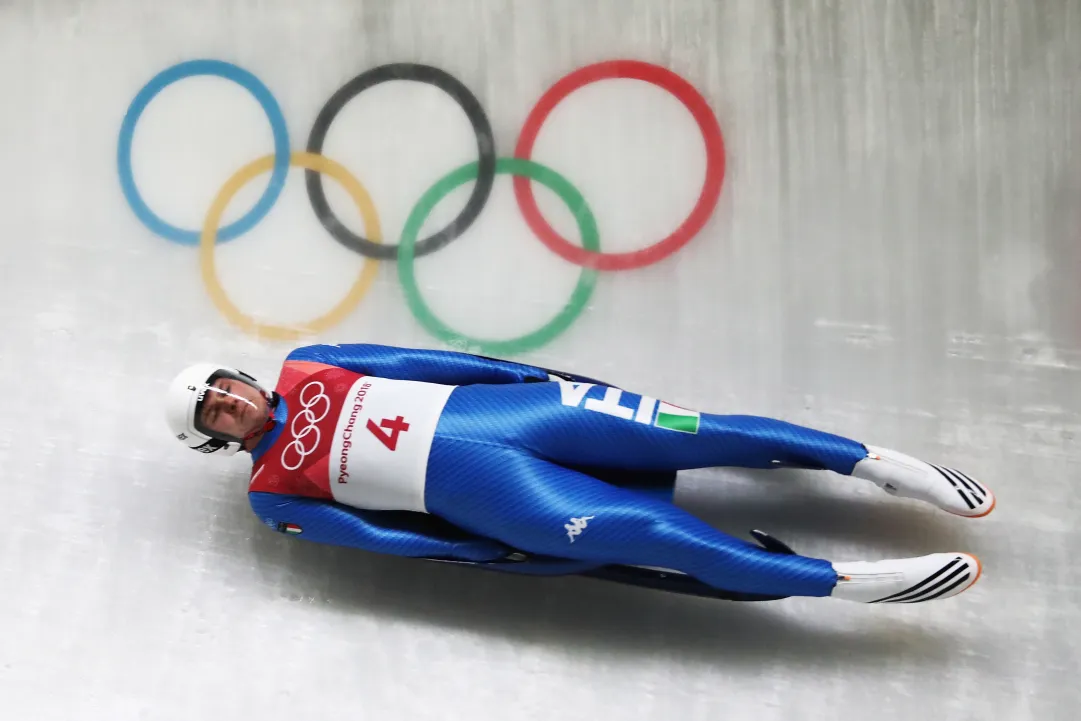

Getty Images

Tomorrow morning the Igls Nations Cup will kick off the 42nd edition of the artificial sled World Cup. A season that promises to be very particular especially in the women's field because it will see the absence of three of the four German athletes who dominated the specialty in the last three four-year periods.
Thursday 21 November 2019 30 minutes reading time
FEMALE SLITTING
The discipline that promises to be the most interesting to follow will be precisely that of women's sledging. In fact, among the girls, Tatjana Huefner, retired at the end of last season, will be missing, and Natalie Geisenberger and Dajana Eitberger both stopped in boxes because they were pregnant. Three very important absences in particular those of Huefner and Geisenberger who alone have won the last 12 editions of the World Cup, 3 Olympic gold medals in the last 3 editions with five circles and 9 of the last 10 editions of the World Championships in the traditional specialty (out of two manche ndr).
In absentia of these stars, the female sled will go in search of its new queen, a kingdom that is likely to last a short time since both Eitberger and Geisenberger have expressed their willingness to return to competition already next season.
But what will be the protagonists of the 2019-20 World Cup? Let's go discover them together.
Julia TaubitzThe German class 1996 has already proved to be a predestined one. Once he took his place in the team and became familiar with all the tracks on the world circuit, Taubitz started to show all his talent by climbing twice on the highest step of the podium in individual tests and demonstrating last winter that he had found a certain consistency of performance on every type of track that allowed her to finish the fourth full season in second place in the general classification behind her partner Geisenberger. Results to the hand Julia can be referred to as the athlete to beat in the circuit.
While there are hardly any changes in the German Felix Loch and Toni Eggert and Sascha Benecken, the women's team is starting with a completely new team. After Natalie Geisenberger and Datjana Eitberger both pregnant and have a break, and Tatjana Hüfner has ended her athletic career, next to Vice World Champion Julia Taubitz for this season Jessica Tiebel, four times Junior World Champion and seventh of last year's Nations Cup, Cheyenne Rosenthal, Junior World Champion 2019, and Anna Berreiter, overall third on the Junior World Cup 2018/19, nominated for the World Cup.
Winner of the crystal ball and undisputed ruler of last season - stained only by the destruction that took place during the individual competition from the Normal Hill of the Seefeld World Cup -, Kobayashi is expected to confirm the title in the maximum circuit that the discipline expects from the times of gold of Janne Ahonen: at the end of March 2020 it will be 15 years since the last time the Finn succeeded in this enterprise.
For his part, Stoch will not need to live the entire season at a high level, but rather to present himself at the start of the World Ski Championships in Planica with a compromise of psycho-physical form / materials from the first class, to try to put in bulletin board the only trophy that the collection lacks. If he were to succeed, the thirty-two-year-old from Zakopane would become the second man in history after Matti Nykkänen able to win the crystal ball, the Tour of the Four Trampolines, the individual world championship gold at the Nordic Ski World Championships, the individual Olympic title and the individual laurel at the World Championships. Translated the Polish would become the greatest of all time together with the native legend of Jyväskylä, but very probably the role of G.O.A.T of the jump would be attributed unanimously precisely to the Central European.
Waiting to see if Kobayashi and Stoch will make the imminent season unique in the history of the discipline, let's see what is the context in which the two champions will try to reach their respective goals: we will start from a spatio-temporal framework analyzing the seasonal calendar, to get to what you can expect from the Italian team, going through the favorites, outsiders, suggestions and possible surprises of a very long winter.
CALENDAR 2019 -20
During the FIS autumn congress held at the beginning of October in Zurich, the final version of the seasonal calendar for the maximum men's circuit of the special jump was confirmed. The canvas that the specialists will follow will be almost unique in that the World Cup will not be interrupted by major events and after the end of this competition will be staged with medals up for grabs, or the World Championships: only two more times in the history of the this anomalous structure emerged in the winters of 1980-1998 and 1994-1995.
In the first seasonal period that precedes the 67th edition of the Vierschanzentournee - after the opening of Wisla, delayed by about a week compared to previous years - the very classic stage of Ruka will be held, therefore we will move to the Ural Mountains to Nizhny Tagil, for return to central Europe in Klingenthal and Engelberg. This season's special feature will be the short amount of time that will elapse between the Swiss races and the start of the Tour, or just 5 days.
On December 28th, with the qualification on the Schattenbergschanze, the legendary event that will crown the athlete capable of collecting the most points in the 8 most famous jumps of the discipline will start. After the race in Oberstdorf on December 29th, there will be a day off and it will be the turn of the Neujahrsskispringen in Garmisch-Partenkirchen (December 31-January 1). Another stop day and it will be the turn of Innsbruck (3-4 January), finally the non-stop Grand Bischofshofen (5-6 January).
Like 12 months ago the town designed to host the first post-Tour weekend will be Predazzo, which will be followed in January by the Titisee-Neustadt 5 and the "hot" races of Zakopane. February will be baptized in the iconic urkurayama of Sapporo, but soon it will return to the Old Continent for the appetizer and the first course of flights respectively between Willingen 5 and Bad Mitterndorf. After the show that presumably will be admired in Austria there will be a sharp change of trend going to face Rasnov's small trampoline, at the World Cup debut, and the ancient Lahti plant.
Finally, it will be up to Norway to occupy most of the month of March thanks to the Raw Air Tournament which will reach its fourth edition: on 6, 7 and 8 March at the Oslo Holmenkollen Ski Festival the first 5 official jumps of the Scandinavian event will be held, then on 9 and 10 March he will compete in Lillehammer to reach Trondheim on 11 and 12; the grand finale of the maximum circuit will be held in Vikersund between the 13th and 15th of March on the occasion of the second flight of the flights and at the foot of the Vikersundbakken the much sought after crystal ball will be delivered.
To round off the very long jump season, from the 19th to the 22nd of March in Planica there will be the twenty-sixth World Ski Flight and - if Willingen can be considered the starter, Bad Mitterndorf the first and Vikersund the second - in Slovenian enjoy the dessert of the flights thanks to the legendary Letalnica bratov Gorišek. Who knows that in those days the new world record cannot be established, a fairly dated record signed by Stefan Kraft on the Buskerud County Springboard in the now distant March 18, 2017.
To sum up, the men's special jump year will begin on Friday 22 November and end on Sunday 22 March, with halfway between each weekend without interruption and sporadically there will also be midweek races. In short, a real tour de force that will, however, make it possible to tackle the crucial appointments of the season in a very diluted way, suffice it to say that between the Vierschanzentournee and the Planica epilogue, it will take about two and a half months.
MEN TO BE DEATH
Kobayashi RyÅyÅ« - He can only be the most awaited man. Watching him repeat what he accomplished last winter is hard to imagine, we are talking about a crystal ball won thanks to 13 statements of the day plus 8 more podiums out of a total of 28 appearances, a tour of the four trampolines dominated far and wide complete with a great slam, a specialty cup won in comeback on trampolines on which there was perplexity about its high level competitiveness, a bronze medal in the team event in Innsbruck obtained by driver and probably in the test in which he had less expectations . Furthermore, the Japanese primates that allowed him in a few months to enter the Olympus of one of the most iconic superpowers of the discipline should not be forgotten: he won the first Goldener Adler for the Rising Sun, the second crystal ball and violated the threshold of 250 meters becoming the first non-European to succeed. As said at the opening, the great goal will be to repeat itself in the World Cup, trying to replicate the conquest of the general classification. However, every opportunity will be propitious to write new records, suffice it to say that in all appearances it cannot be excluded from the main favorites for victory. Finally, he will not fail to give the public moments of pure poetry, as he did last year in Val di Fiemme in the first series of race one, when his opponents struggled to get past point K and he humiliated them by going to kiss the 'HS in absolute fluency.
Kamil Stoch - Defining it as the first alternative to Kobayashi is improper, or rather it is likely that it can face the winter projected to give its best in March. It is useless to hide the fact that the crucial appointment for his career will be precisely in Planica, the absolute flight facility most congenial to him, and if everything were to go well he could probably opt to dedicate his life to something other than the special leap in the competitive meaning of the discipline. For the first part of the World Cup it will be interesting to understand the extent of the impact of the technical driving change within the Polish team, with Michal Dole taking the place of Stefan Horngacher, the latter landed in Germany.
Stefan Kraft - The subject is well known and with him its potential. After a dreamy 2017 and a troubled 2018 due to some problems in the technical-material compromise too, the last competitive vintage saw him return forcefully into vogue unless he had to surrender on the most beautiful to an unattainable Kobayashi. Should he succeed in re-proposing the good things shown in the current calendar year, then he will be a serious pretender to try to counter his Japanese rival. Clearly in front of the opposing physical bullying could accuse the blow, but the innate quality in the phase of flight - not so much subject to the drops of form - could again be his winning weapon.
Markus Eisenbichler - In the past season he has understood what it means to win - no less than the world title on Large Hill -, but at the same time he had to cash in on defeats - always on the Bergiselschanze but during the Tour and later in the finals in Slovenia. The constancy of performance is not really the main dish of the house, often invalidated by aspects of a character nature, but talent is there and the times seem to be ripe for the definitive consecration. Who knows if he decides to go all-in on the Vierschanzentournee to try to break the curse of the great slam of Sven Hannawald, now dominant for almost 18 years.
Timi Zajc - Great protagonist of the first part of the summer, when in the Summer Grand Prix he won the stages of Wisla and Courchevel, the final victory was played to the end despite the many races deserted. More than as one of the big favorites, he starts in this World Cup with the role of a possible crack: in recent months he has shown a maturity that is not expected from a boy still in junior age, limiting damage on weekends when nothing seemed to turn the right way (see the GP competition in Zakopane). Initially he will not have great pressure on him, but over time his aptitude for tense situations will be tested where the champions prove to have a cool head.
OUTSIDER
Many athletes fall into the category of outsiders, the same Eisenbichler and Zajc still do not enjoy a status comparable to the other three sacred monsters mentioned above. The same Dawid Kubacki starts from a hybrid position like the German and the Slovenian: fresh from his second career victory in the Grand Prix and just back from his best career season culminating with the lucky gold medalist from the Normal Hill in Seefeld, the 29-year-old from Zakopane wants to continue to amaze, but how far will it go? Last year the Polish even went so far as collecting podiums in flight races and in contexts theoretically not favorable to him, we will see if he will have taken another step forward thanks to the new technical guide by Dole al.
So far there has been talk of jumpers from 5 of the 6 current superpowers of the discipline: the sixth, or Norway, is grappling with the unknown by the name of Daniel Andre Tande. In the last year and a half what on paper is the leader of the movement led by Alexander Stöckl has seen every, from Stevens-Johnson syndrome to bad falls that have made him observe long periods of forced stop. A Tande in health is a man to beat on the dry jump, but the unknowns are not few at the moment: who knows that a season start on the sly will allow him to present himself at the World Championships in Planica in good shape to try to defend the title won a couple of years ago in Oberstdorf. The Scandinavian team, already rich in 3 junior world champions of the last 5 seasons, will also be strong on veteran Robert Johansson who from time to time will be able to try to blow the bank on the single competition.
Another mysterious object is Karl Geiger, who will reveal his cards in a few days to Wisla. The new head coach of the German team Horngacher has spent important words against the Bavarian, stating that in recent times he is jumping well in training, an atypical fact for the one who has accustomed us to express himself better in competitions than in everyday life. If the twenty-six year old from Oberstdorf will continue to bring to the race a higher level than the one shown these days then he will really be a very uncomfortable customer for everyone. We close the roundup of athletes who can seriously try to get heavy results with the third Polish of the lot, Piotr Zyla: the same age as Stoch is the quintessentially placed, just this feature almost excludes him from the big favorites rose. Beyond the mere statistical data, in the last three years Zyla has held a remarkable return and second to few; who knows that among the many litigants it is not he who finds the season of grace.
CHARM-SURPRISES
We come therefore to the last category of jumpers analyzed, those who start further back in the hierarchies but who have discreet reasons to try to have their say. Last summer one of the protagonists was undoubtedly the Japanese Yukiya Sato, a boy who undoubtedly has to put on an intriguing talent, but to be able to play to the full the Summer GP needed to take part in all the races in program: the second final place remains a result of thickness on which the winter of the definitive consecration can build. Similarly to the 24-year-old Asian, Philipp Aschenwald, the second force in the Austrian team, is also looking for his own dimension in the maximum circuit. For its part the Tyrolean has some more weapons than Sato to try to collect a high number of top-ten in the season and maybe even some podiums.
Let's move on to those who have had their results archived in the past, but who have been overshadowed by the poor performance consistency: emblems in this regard are Johann Andre Forfang and Domen Prevc. Both are considered crystalline talents but so far unfinished, for both of them the point is worth that if an evolution were to arrive in the first phase of the jump, managing to raise more the center of gravity without negatively affecting the efficiency of the whole performance, then they could seriously become something more than just outsiders. The conditional is mandatory since the actual success of this step forward is by no means trivial.
Finally, one cannot fail to say a few words about the one who holds the record of victories in the World Cup: Herr Gregor Schlierenzauer. After so many years the champion of Innsbruck has returned to make use of the precious collaboration of Werner Schuster (the two had already worked together at the time of the Stams Ski College, when Gregor was preparing to illuminate with his own class the whole world of jumping) . The summer spent in the archives said well at times the Rot-Weiß-Rot, or when it could benefit from high speeds or jump on particularly friendly trampolines. Surely Schlierenzauer remains an important suggestion, capable of bringing high proceeds to the discipline with its mere presence: should the athlete be able to return, it would benefit not only the jump, but the entire Nordic skiing.
HOME ITALY
It is useless to hide that Italy is destined to suffer in this season in the maximum circuit of the male jump: theoretically the tip of the blue movement should be Alex Insam, but the summer has played another. The Gardena, in fact, after finishing the collaboration with Åukasz Kruczek, relied on the Slovenian technician Matja Zupan, but in the appearances on plastic very encouraging results did not arrive. The hope is that in the off-season we have worked mainly in view of winter and therefore from now on the fruits of the sacrifices of the last months can be collected.
During the Italian championships held a month ago in Predazzo, Giovanni Bresadola confirmed the improvements made by winning the overall title. The Trentino, the only Italian to score in Continental Cup between August and September, preceded Federico Cecon and Insam. Given the young age it will be difficult to see the young Bresadola in the World Cup constantly, the season of which will be marked mainly by the junior World Championships in Oberwiesenthal. So in the maximum space circuit in the Gardena, the holder of the Italian record and more occasionally we could also see the most experienced of the Cecon brothers.
#FISCHNALLER #SLITTINO #GEISENBERGER #LOCH
© ALL RIGHTS RESERVED
Social media engagement
Più letti in Sport invernali
L'Italia dello skiroll saluta Madona e un Mondiale da 4 medaglie, l'ultima è di Boccardi nella Mass Start
La roveretana è di bronzo nella partenza in linea a skating, firmata dalla solita Ragnhild Aarenkol, con la gara maschile vinta dal padrone di casa Vigants (amaro 4° Dellagiacoma). Titoli juniores alla norvegese Lia e allo svedese Blomberg Gerle.

44