
Speed Skating
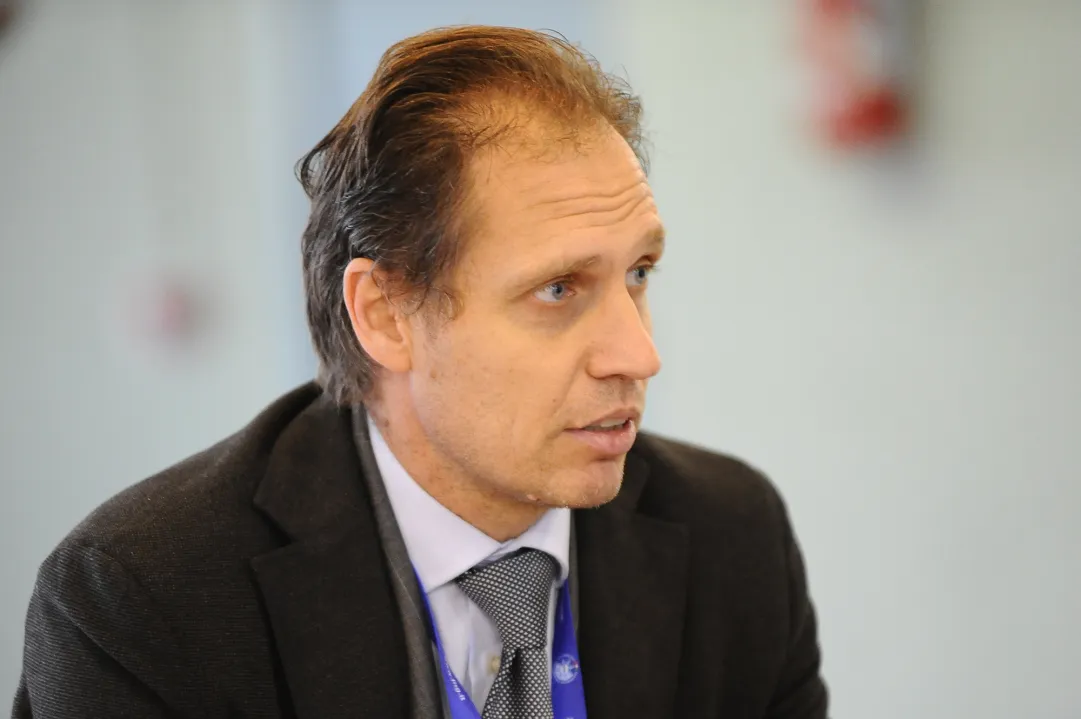

Francesco A. Armillotta

Sochi is approaching and the program of the Olympic long track skating is both in short, is well defined. Now it's up to the athletes to complete the qualification path already ended for short track and in the process of advancement in speed skating.
Friday 29 November 2013 14 minutes reading time
But look at the future of the discipline on the ice is a continuous monitoring task. For this work the ISU (International Skating Union) in collaboration with the Olympic Committee. The proposals come in five circles in Lausanne, just by the highest body of the ice. In less than 100 days dall'Olimpiade Russian, then, is already thinking about the appointment of Korean Pyeongchang in 2018. And the news for skating could be full-bodied. Above all, the application of the mass start race, which could be added to the program of the Korean. This is the main developments in the course of work. This was confirmed by the sports director for the speed skating, Hugo Herrnhof. The South Tyrolean, former athlete blue thick, has lived his racing career in the short track at the turn of the '80s and '90s, a time when the sport entered the Olympic elite. Just gave him the first gold blue in the discipline (relay 5000 but 1994 Lillehammer with fellow Carnino and Fagone). Now, with the Council of the ISU, with another Italian president, Ottavio fifties, is trying to give a new competition to the long track.
The introduction of the mass start already arrived in 2012 at the World Cup, is just one of the changes in regulations and specialty ice. Here are the main new features in the pipeline for the coming years. We just illustrates the Herrnhof, exclusive to NeveItalia.
Hugo Herrnhof, from his role in the ISU Executive and his direct experience as an athlete on the ice, we can update the news for skating? The one already been experimenting for some time and we can say that the mass start is a good place for it to be recognized as an Olympic distance?
"The path of the mass start is progressing well. We have introduced for the first time as a demonstration event at the Junior World Championships in 2007 in Innsbruck. That was the first official rehearsal to see if in the future could have a positive match. It must be said that the first step in the junior category is basic and is part of a practice: it has been so with all the sizes we introduced the ISU, as the Team Pursuit earlier, it is always started by youngsters. They are the ones who are best suited to the innovations of the regulations and not only. We had a great success then, so that'' s decision to introduce the first mass start races in the World Cup, but always at the Junior level. Then, experimenting with more continuity size, some changes have been introduced. Three years ago, so we added in Cup competitions for Senior, in principle always at demonstration level and gradually became an integral part of the official calendar of the World Cup for a year and a half. Later, it was finally approved at the ISU Congress in 2012, that the formula for the mass start will be at the World Single Distance in 2015. Officially medals and titles will be available as well.
Cup from the official introduction into the Olympic program. Recently, it has also been made an important step with the International Olympic Committee.
"Yes, in fact, in 2012 we did a test key IOC Youth Olympic Games in Innsbruck. It was important to show it in person before the Olympic Committee. The then president Jacques Rogge and the Board of Directors came for the occasion in Austria they were satisfied. Although the weather was not on our side in the women's race and then it started to snow to rain. This has affected the progress of the test, as it would for any other sport on ice. Nevertheless, the experience has been quite successful and the reception by the IOC has been positive. "
The move to introduce the mass start at the Youth Games we can say that it was the dress rehearsal to make the process move forward the Olympic?
"He was a very important step. And there's always considered that the Games are a competition that youth always allow the introduction of novelty. The format itself is different from the Olympics "large." And also why the IOC has accepted the proposal immediately Isu to insert it into the program. Then, of course, the possibility for the leaders of the Committee to watch the race live, has done nothing but increase the prices. That said, the next step should be the request for inclusion of the mass start in the official Olympic program, possibly from Pyeongchang in 2018. "
What time?
"It's up to the president of the ISU, Ottavio fifties, the task of presenting the project at best. It would be important for the International Federation. First, because the ice could have a medal in both men's and most women either. Also, last but not least, it would give the opportunity to "rotellisti" to open the doors to an Olympic competition, as the in-line skating is not a sport five circles. It is now a widespread phenomenon that sees the skaters on the road closer to the ice skating rink. "
A widespread phenomenon in Italy ...
"At the moment it is so also in our country. The example that kicked off this possibility is certainly that of Hippolytus Sanfratello, that the wheels came on to win the team gold at the 2006 Turin. But not only in Italy, we have a worldwide increase of athletes who will participate in the Olympics due to the mass start. There is also to say that it is a game that lends itself really: it is not a coincidence that many of the winners turn out to be those who have come from users. It is a consequence due to the fact that they know how to compete in a race situation like that. They know the tactics of the race, unable to juggle in the middle of the group. "
What are the technical differences between mass start races and other long track?
"First of all, starting all together, the athlete may have the advantage of exploiting the wakes of those preceding it. Which means savings of energy and effort. From the start on, you can always play the race tactics. This implies an added value for the skater, that comes from his cunning and intelligence in understanding where to stand and what time to launch the final sprint. This is perhaps the aspect that benefits those who are more accustomed to traveling in groups such as rotellisti. It is also a format that really like to shorttrackisti, who are already accustomed to the contact on the track. "
And for those who compete in long track, it may be difficult to switch to mass start?
"In part, yes. Being accustomed to traveling in a lane of their own, not to be disturbed by anyone else and to set their own pace, regardless of the references of others. They do not have the "push and pull" that could embarrass several athletes. "
Another point in favor of the mass start is to have a high media appeal and television.
"Yes, it is a bit 'different. From a certain point of view, it could be considered as a format more attractive and spectacular. But I want to clarify that we do not want to distort the history of speed skating: the history and traditions remain. But the idea of ​​a tiling for all variants is interesting. "
There could also be giovamenti for the color blue.
"Yes, I must say that Italians have adapted easily. Over all, Mirko Nenzi did not go absolutely wrong when he participated in the mass start. In general, many of the Italians had fun in this new venture in the race. "
As for the short track, there are changes on the horizon?
"There are no big changes in the near future. Distances and races are fine as they are now. A possible change, but not in the short term would be to go to a World Cup for the individual distances, but it is not known yet. For the rest we are working for an "event coordination", in fact, I will cover a lot of this. We would like to make sure to provide a standard homogeneous in all the races of the World Cup, taking precise uniformity in levels of service and competition programs. The current goal is to put a little 'more order, because we keep very present in a World Cup that is much more palatable and interesting at the television. You could enter this value added to the short track, as the races themselves are already working well. At the level arbitration, we have given more detailed specifications of the judges, so that they can interpret situations in a manner consistent race of any disqualification to be assigned. In short, we set the parameters clearer, and this also helps the sport. In this way, athletes, coaches and judges are well aware of the risks and benefits lawful. "
Social media engagement
Più letti in Sport invernali
Tocca a Freddy continuare la striscia dei fratelli Carrick-Smith: prima vittoria in ANC per il britannico e per Amelia Smart
Australian New Zealand Cup 2026: a Coronet Peak si è tornati finalmente a gareggiare, con lo slalom maschile che vede il classe 2007, vice campione del mondo jr di specialità, precedere nettamente Meissl e Hagen. La specialista canadese anticipa Hoffmann e la solita Butler nella prova femminile. Ora i giganti.
2